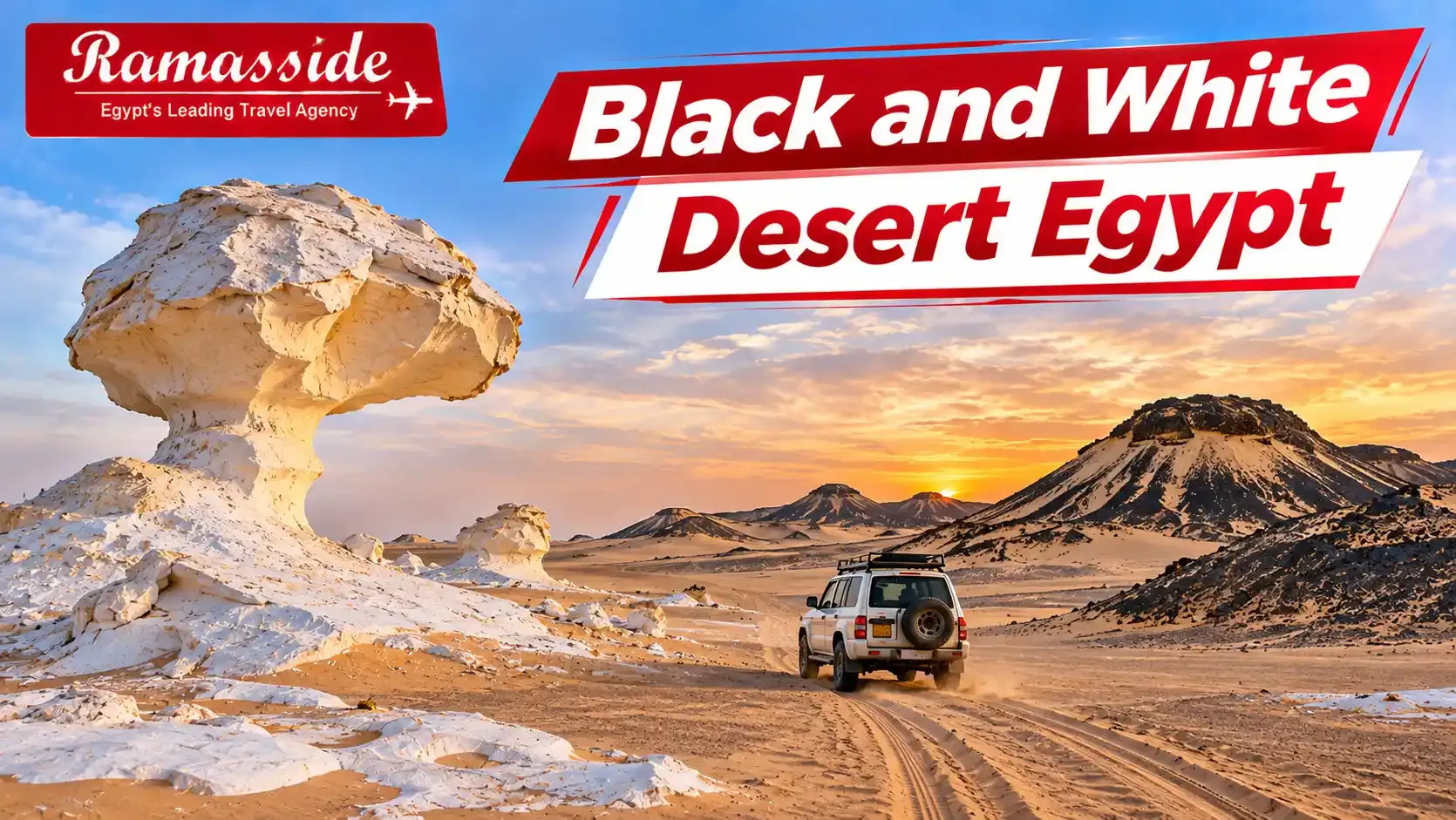
A road trip from Cairo to the campsite in Egypt's Western Desert takes you from bustling city streets into one of the most surreal geological landscapes on Earth. Stretching between Bahariya Oasis and Farafra, this route links volcanic black hills, sparkling quartz outcrops, sweeping sand dunes and wind-sculpted white chalk formations before ending with an unforgettable night under the desert stars.
This practical guide maps out the exact driving route, distances between stops, a side-by-side comparison of both deserts, trip duration options, and everything you need to know about real camping conditions.
What Are the Black and White Deserts?
The Black and White Deserts are two neighbouring but visually contrasting landscapes in Egypt's Western Desert. The Black Desert is known for its dark volcanic hills and basalt-covered slopes, while the White Desert is famous for its pale limestone and chalk formations shaped by wind erosion.
Both are commonly explored from Bahariya Oasis, which serves as the main starting point for organized desert safaris. The route continues south towards Farafra and passes several geological landmarks along the way. The White Desert is also a protected natural area, officially designated in 2002.
Where Are They Located?
The two deserts are located in Egypt's Western Desert, southwest of Cairo. Bahariya Oasis, in Giza Governorate, is the usual gateway for visitors travelling from the capital. Farafra Oasis, in New Valley Governorate, lies farther south and provides another access point to the White Desert.
The main sightseeing route usually follows this order:
The White Desert Protected Area covers approximately 3,000 square kilometres and lies northwest of Farafra town. It was declared a protected area in 2002 under a government decree. Its protected status means visitors should follow local conservation rules and travel with an experienced operator familiar with the reserve.
How Were They Formed?
The Black Desert and White Desert have different geological origins, which explains their contrasting colours and scenery.
The Black Desert contains dark volcanic material, including basalt and other volcanic rocks, covering hills and slopes. These dark surfaces create the appearance of black mountains rising above the surrounding sand. The landscape is particularly striking when viewed from higher ground, where the dark hills contrast with the lighter desert floor.
The White Desert is mainly formed from pale limestone and chalk deposits. The region was once covered by an ancient sea, and its geological layers preserve evidence of that marine environment, including fossils and shells. Over long periods, wind erosion and other natural processes sculpted the softer rock into unusual shapes, including columns, mushrooms and animal-like formations.
Crystal Mountain is another geological feature along the route, with quartz-rich formations that sparkle in the sunlight. Together, these landscapes make the Western Desert a fascinating destination for anyone interested in geology, natural photography and desert exploration.
Black Desert vs White Desert: Key Differences (Comparison Table)
Although they are often visited during the same safari, the Black Desert and White Desert offer very different experiences. One is defined by dark volcanic hills, while the other looks like a collection of giant white sculptures spread across an open landscape.
The Black Desert is usually a shorter sightseeing stop, while the White Desert is where many travellers spend the evening and night. Visiting both in one journey gives you a much better understanding of the region's geological variety.
How to Get to the Black and White Desert from Cairo
The most practical way to reach the desert from Cairo is to drive to Bahariya Oasis and continue with a local 4x4 team. The first section is a long paved-road journey, while the sightseeing route inside the desert requires a suitable off-road vehicle.
A standard car is not appropriate for exploring the protected desert tracks. There are no conventional roads connecting every rock formation, and navigation can be difficult without local knowledge. Most visitors book an organized Egypt desert safari tours package that includes the Cairo transfer, local 4x4 vehicle, guide and camping arrangements.
The Route via Bahariya Oasis
The journey starts with an early pickup from your hotel in Cairo or Giza. You travel southwest towards Bahariya Oasis, usually arriving after several hours on the road. Bahariya is the main service base for the safari, where travellers can visit local attractions, enjoy a meal and prepare for the off-road section. From the oasis, the route continues through the Black Desert before reaching Crystal Mountain and the Valley of Agabat. The final major stop is White Desert National Park, where the 4x4 explores the famous chalk formations before the camping team selects a suitable overnight location.
A typical route follows this sequence:
The exact order can change according to the campsite, weather, road conditions and the operator's itinerary. Some tours include the Black Desert and hot springs on the second day, while others add more time for Bahariya's archaeological sites.
Driving Times and Distances Between Stops
The distance from Cairo to Bahariya Oasis is approximately 350–370 kilometres, and the drive usually takes around four to five hours depending on traffic, pickup location and rest stops. The off-road section then continues through the desert in a 4x4. The following figures are practical planning estimates rather than guaranteed driving times. Exact distances inside the desert vary according to the route selected by the guide and the condition of the tracks.
Note: Driving estimates exclude sightseeing stops, meals, checkpoints and time spent exploring off-road locations.
The journey is not simply a series of short transfers. You will spend a substantial part of the day travelling, stopping for photographs and exploring uneven terrain. This is why an overnight itinerary is usually more enjoyable than trying to return to Cairo on the same day.
Top Stops on a Black and White Desert Trip
The route is one of the highlights of the experience. Each stop has a different landscape or historical feature, and the transition from Bahariya's palm groves to the volcanic hills and white rock formations makes the journey particularly memorable.
Bahariya Oasis: Hot Springs, Golden Mummies & English Mountain
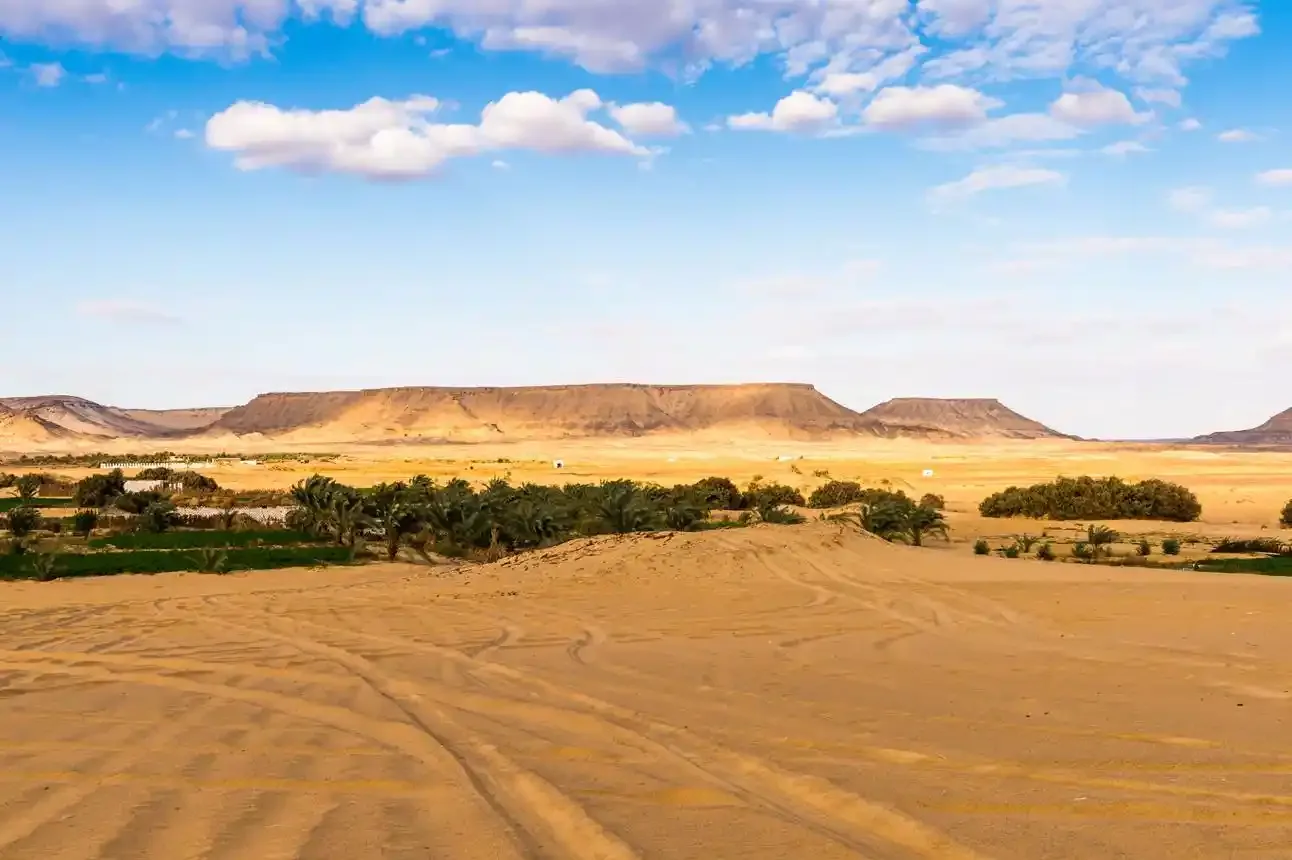
Bahariya Oasis is the main starting point for most White Desert safaris. Its landscape includes palm groves, natural springs, salt lakes and small settlements surrounded by desert hills. Before heading off-road, visitors can explore several local attractions:
Bahariya is also a useful place to have lunch, refill personal supplies and prepare for the more remote part of the trip. Depending on your itinerary, you may spend a night in an oasis lodge before heading into the White Desert.
The Black Desert
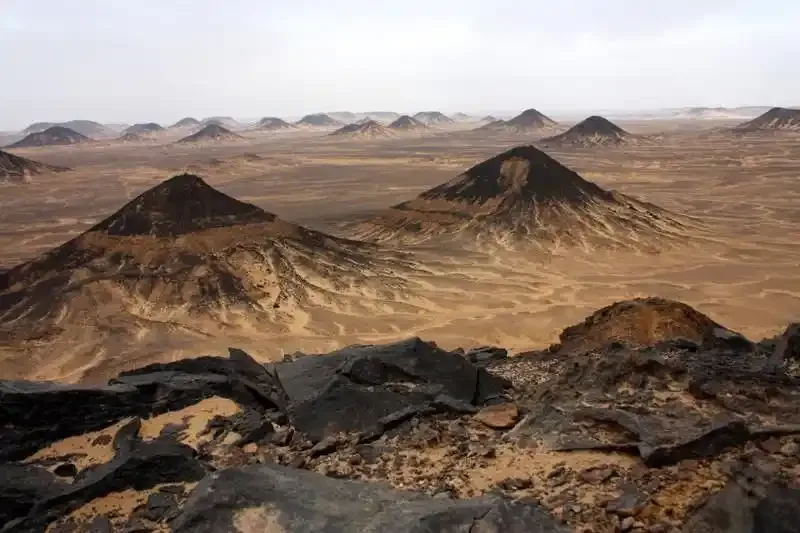
The Black Desert is recognizable by its dark volcanic hills covered with black stones and mineral deposits. The hills rise above the surrounding sandy landscape, creating a dramatic contrast that becomes especially striking under the bright desert sun.
One of the best ways to appreciate the area is to stop at a suitable viewpoint and look across the volcanic hills. Some itineraries include an optional climb to a nearby hill, but this should only be attempted when the guide confirms that conditions and access are suitable. The landscape is ideal for photography, especially when the sunlight creates strong contrasts between the dark rocks and pale sand. Allow time to explore the area rather than treating it as a quick photo stop.
Crystal Mountain
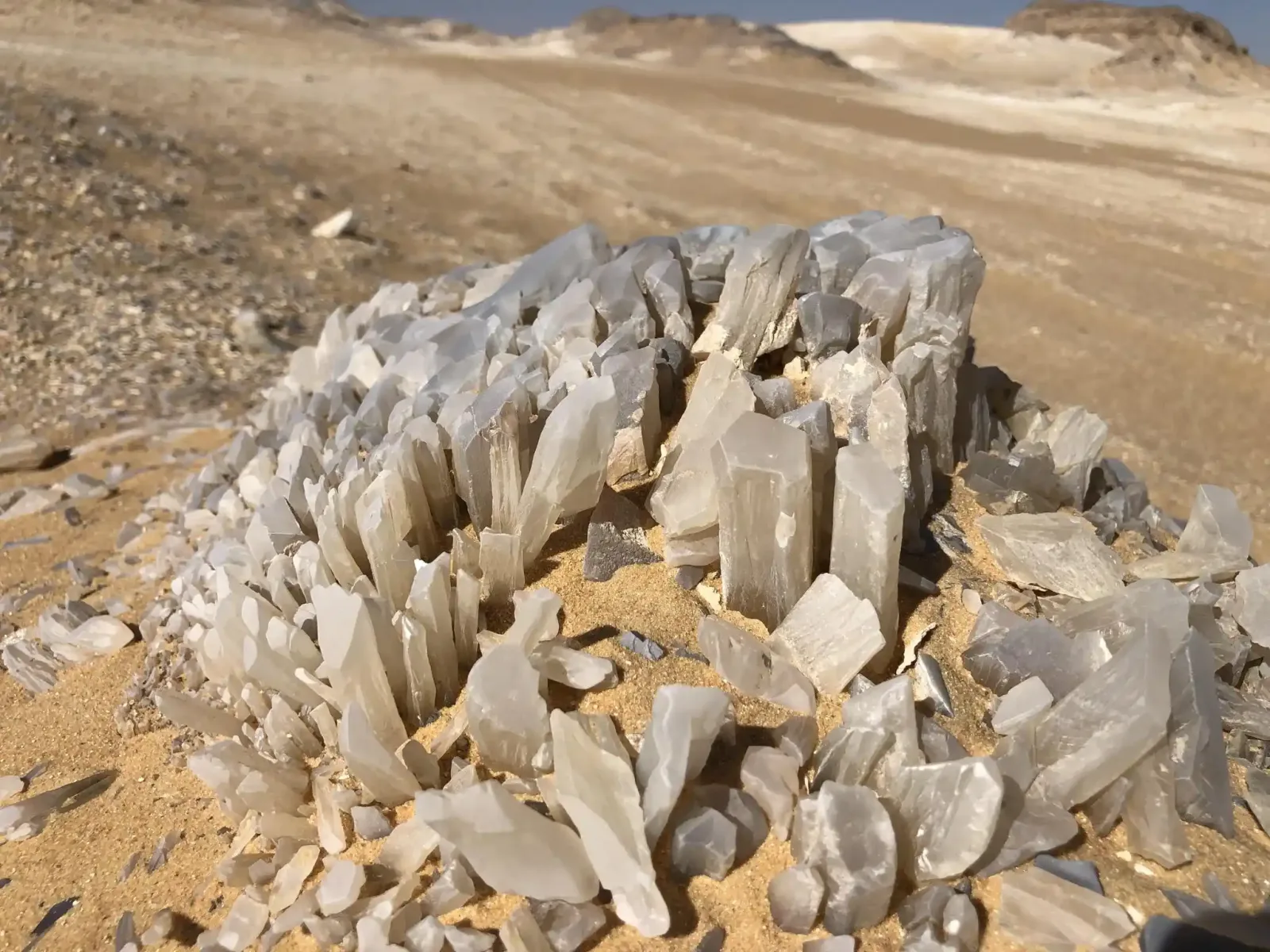
Crystal Mountain is one of the most recognizable stops between Bahariya and the White Desert. Its exposed rock formations contain quartz crystals that catch the sunlight, creating a sparkling appearance.
Despite its name, it is not a mountain made entirely of precious crystals. It is a geological outcrop with quartz-rich formations and a distinctive natural structure. Visitors usually stop to walk around the exposed rock and take photographs. The most important rule is to leave the crystals where they are: removing pieces damages the natural feature and goes against responsible visiting practices, especially in a protected landscape.
Valley of Agabat
The Valley of Agabat is known for its dramatic combination of pale rock formations, sand dunes and open desert scenery. The landscape changes as the 4x4 moves between rocky areas and soft sand, creating one of the most photogenic sections of the journey.
The name is often associated with the valley's impressive rock formations and unusual terrain. Visitors can stop to explore selected viewpoints, take photographs and enjoy the contrast between the dunes and the surrounding cliffs. Some tours include sandboarding here, depending on the sand conditions and the guide's assessment. It is also a good place to appreciate how wind and erosion have shaped the desert over time.
White Desert National Park (Mushroom & Chicken Formations)
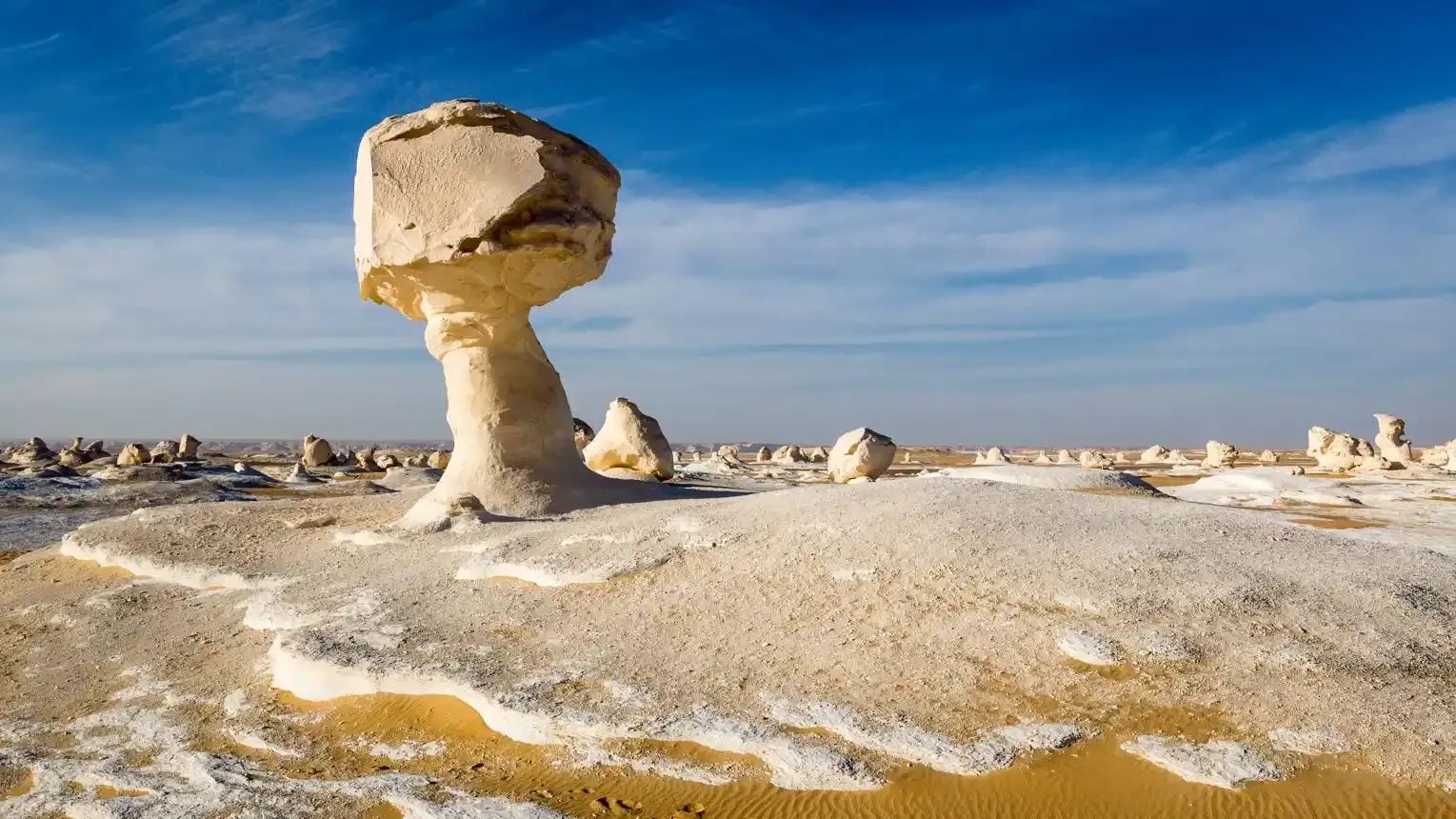
White Desert National Park is the main highlight of the journey. Its pale limestone and chalk formations have been shaped by wind erosion into unusual sculptures that resemble mushrooms, birds, animals and other natural forms. Among the most recognizable landmarks are:
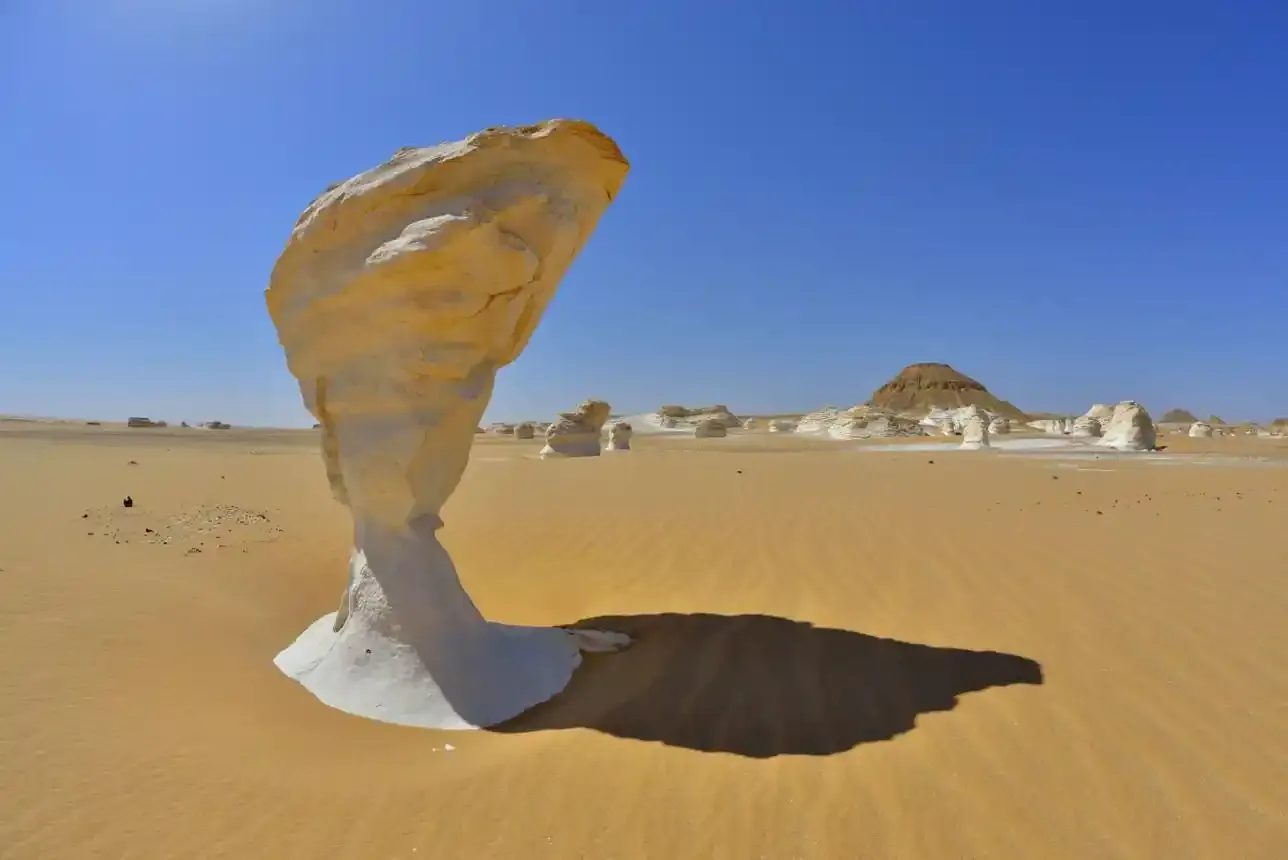
The names are informal descriptions based on the appearance of the formations, rather than official geological classifications. Their shapes can look different depending on the light and the direction from which you view them. The White Desert is also known as Sahara El Beyda, and it is one of Egypt's most distinctive protected landscapes. It is particularly beautiful around sunset, when the white rocks take on warmer colours and the surrounding sand becomes more defined.
Moon Cave and Other Hidden Spots
Beyond the famous Mushroom and Chicken formations, the wider desert contains smaller caves, rock openings and less-visited formations. Some routes include a stop at a location referred to by local operators as Moon Cave, while others focus on different rock formations depending on the day's route.
Do not assume that every safari includes the same hidden locations. Access depends on the approved route, the guide's local knowledge and the condition of the terrain. Ask your operator which formations are included before booking if a particular location is important to you.
Things to Do in the Black and White Desert
The experience is not limited to driving between geological landmarks. A desert safari combines off-road exploration, outdoor activities, photography, local food and an overnight stay beneath an open sky.
4x4 Desert Safari
A 4x4 safari is the main way to explore the Black and White Deserts. The vehicle allows the guide to travel across sandy tracks and rocky areas that are inaccessible to ordinary cars. During the journey, you can stop at viewpoints, explore selected formations and enjoy the changing landscape. The driver may adjust the route according to sand conditions, weather and access restrictions. Choose an operator with an experienced local desert driver: driving off-road without the right vehicle, route knowledge and permits can put travellers at risk.
Camping and Stargazing
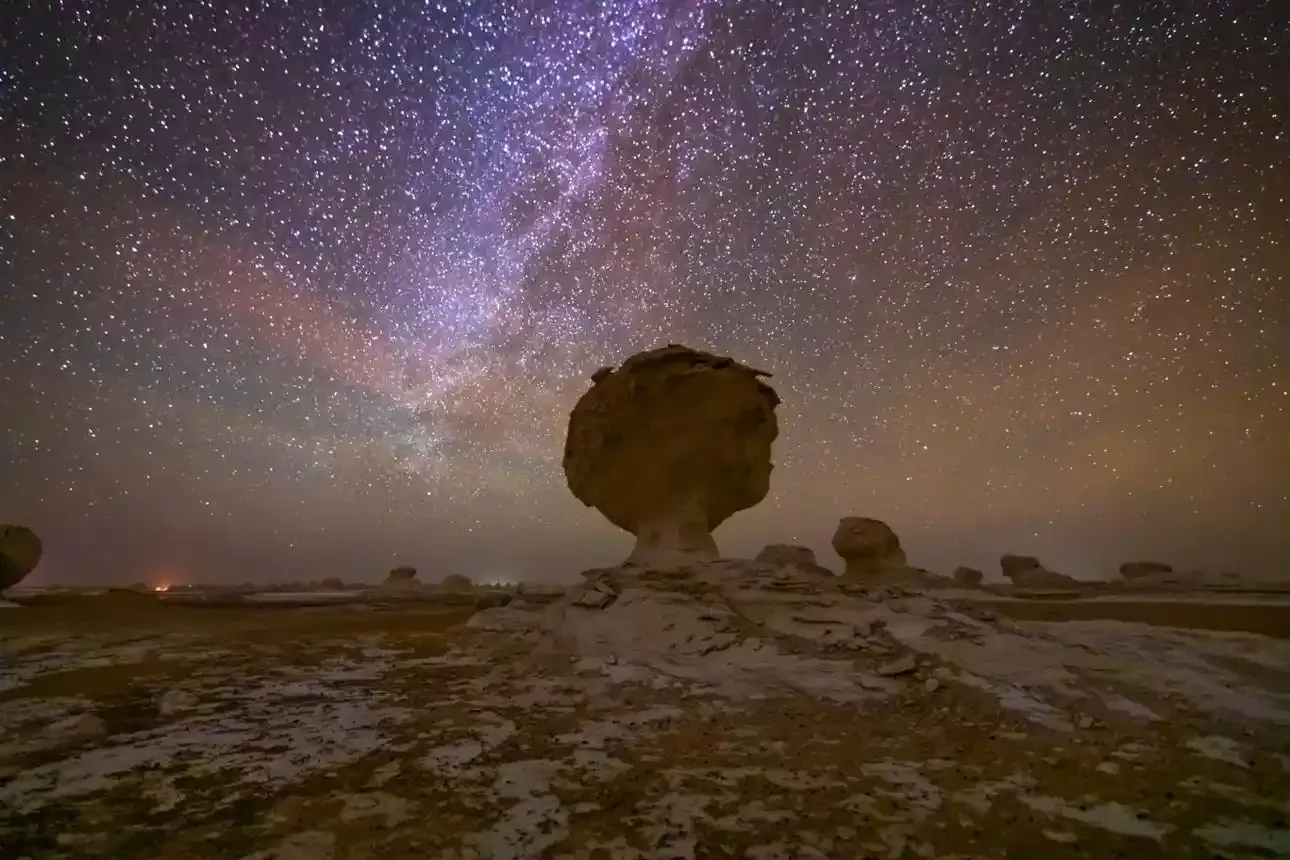
Camping is one of the defining parts of a White Desert camping experience. After exploring the formations, the team selects a suitable campsite, sets up the tents and prepares dinner. Once the light fades, the landscape becomes quiet and the lack of city lighting creates excellent conditions for stargazing. On a clear night, you may see a large number of stars and, depending on the season and moon phase, parts of the Milky Way. The experience is simple rather than luxurious, so expect outdoor sleeping arrangements, limited facilities and a close connection with the natural environment.
Sunrise, Sunset and Desert Photography
Sunset is one of the best times to photograph the white formations. The low sunlight creates shadows and brings out the textures of the chalk, while the surrounding sand changes colour as the day ends. Sunrise offers a different atmosphere, as early light gradually illuminates the rock formations and cooler conditions make a short walk around the campsite comfortable.
For the best photographs:
Sandboarding and Bedouin Dinner
Some desert itineraries include sandboarding on suitable dunes. The activity is usually simple and depends on the slope and sand conditions, so it may not be available at every stop.
Dinner is another important part of the camping experience. The desert team typically prepares a traditional meal, often served around the campsite. Depending on the operator, the meal may include grilled food, rice, vegetables, bread and tea. You may also have the opportunity to sit around a campfire, talk with the local team and enjoy the quiet of the desert after sunset. Wildlife sightings are possible but never guaranteed; desert foxes, including the fennec fox, live in the wider region, but visitors should not feed, chase or approach wild animals.
What Is Camping in the White Desert Really Like?
Camping in the White Desert is a simple outdoor experience in a remote protected landscape. It is not a hotel campsite with permanent rooms, showers, restaurants and electrical outlets. The desert team brings the necessary equipment, sets up the sleeping area and prepares meals before leaving the area as clean as possible.
A typical organized camp includes:
Bathroom facilities: There are no standard public bathrooms or permanent shower blocks among the main rock formations. Toilet arrangements vary between operators; some teams provide a portable toilet or a private toilet tent, while others use a designated low-impact arrangement away from the campsite. Ask exactly what is provided before booking—particularly if travelling with children, older family members or anyone needing accessible facilities—and do not assume a shower will be available during an overnight desert camp.
Electricity and phone charging: Do not expect mains electricity at the campsite. Some operators may carry portable power solutions, but charging access is not guaranteed. Bring a fully charged phone, a power bank and a headlamp or flashlight.
Mobile signal: Mobile coverage can become weak or disappear as you travel away from Bahariya. The White Desert is remote, and you should not rely on continuous phone or internet access. Download maps, booking information and any important travel details before leaving the oasis.
Meals and drinking water: Meals are generally prepared by the desert team and served at the camp. The exact menu depends on the tour arrangement, so inform the operator in advance about allergies, dietary requirements or food preferences. Carry a reusable water bottle and confirm how much drinking water is included, as hydration is important even in cooler months.
Sleeping conditions: The desert becomes much colder after sunset, especially in winter. The ground may also feel cold through a thin mattress, so ask whether the sleeping bags are suitable for the season and whether additional blankets are available. The reward is a night with very little artificial light, a wide open sky and the unusual white formations surrounding the campsite. If you enjoy nature and can manage basic facilities, it can be one of the most memorable nights of an Egypt trip.
How Many Days Do You Need? (Day Trip vs 2 Days vs 3 Days)
Choosing the right trip length makes a huge difference to your comfort, since driving from Cairo takes nearly half a day each way.
If your schedule allows it, booking a 3-day tour to White Desert & Bahariya gives you enough breathing room to enjoy both the oasis heritage and the desert formations without rushing back immediately after sunrise.
Best Time to Visit the Black and White Desert
The best time to visit the Black and White Deserts is between October and April. During these months, daytime temperatures are pleasant for walking, climbing viewpoints and exploring the rock formations, while the skies are typically clear for stargazing. Summer (May to September) should generally be avoided, as midday temperatures regularly soar above 40°C (104°F), making off-road exploration uncomfortable and limiting outdoor activities during the afternoon.
Weather and Night Temperatures by Season
What to Pack for a Desert Safari
Because desert temperatures swing dramatically between day and night, layering is essential. Pack light, breathable fabrics for daytime sun and warm outerwear for evenings around the campfire:
Is the Black and White Desert Safe? Permits, Guides & Sandstorms
Visiting the Black and White Deserts is safe when organized through a licensed, reputable tour operator. Because the region sits in a sensitive border governorate and includes a protected national park, authorities require official travel permits and police/military checkpoint clearances for foreign visitors. Reputable operators arrange all necessary permissions in advance using your passport details.
Never attempt to drive off-road independently without a local Bedouin driver. Shifting sand dunes, soft sand traps, lack of mobile signal and sudden weather changes—including seasonal sandstorms—make local expertise vital. Experienced drivers monitor wind forecasts, carry recovery gear and satellite or radio communication where required, and know sheltered camping spots away from wind corridors.
Responsible Travel in White Desert National Park
White Desert National Park is a fragile natural monument that took millions of years to form, and preserving it requires cooperation from every visitor:
How Much Does a Black and White Desert Tour Cost?
The cost of a Black and White Desert tour depends on whether you join a small group or book a private tour, the trip duration (2 days vs 3 days), and the standard of vehicle and camping gear. On average, an all-inclusive 2-day/1-night private tour from Cairo ranges from $180 to $320 USD per person (decreasing per person for larger groups), while 3-day/2-night itineraries typically range from $260 to $450 USD per person.
What is usually included:
Personal expenses, tips for your driver and guide, and optional extra activities outside the itinerary are normally excluded.
Combine the Desert with Cairo, Siwa or a Nile Cruise
Because Bahariya Oasis is easily accessible from Cairo, the Black and White Deserts fit smoothly into broader Egypt itineraries. If you want to pair the Giza Pyramids and Egyptian Museum with an overnight desert expedition, explore our 6 days Cairo & desert adventure. Travellers looking to venture deeper into the Western Desert can connect Bahariya and the White Desert with the remote salt lakes and mud-brick fortresses of Siwa on a 7 days Siwa, Bahariya & White Desert tour, or focus solely on Siwa with a 5 days short break at Siwa Oasis. For the ultimate contrast between ancient temples and desert wilderness, our 12 days pyramids, Nile cruise & oases itinerary brings together Cairo, Luxor, Aswan and the Western Desert in one seamless journey.
Ready to sleep under the stars of the White Desert? Book our 3-day Black & White Desert and Bahariya tour with hotel pickup from Cairo, 4x4 safari and full camping gear — or message us on WhatsApp today.
Book Your Desert Safari