Islamic Cairo is one of the most rewarding parts of the Egyptian capital to explore on foot, but its mosques, medieval gates, busy markets and historic streets are spread across a large area. Planning your visit around nearby attractions makes the experience easier and helps you avoid spending too much time travelling between monuments.
This practical guide explains what to see, how to organize half-day and full-day walking routes, what to know about opening hours and admission, and how to visit respectfully. Whether you are interested in architecture, history or local street life, you can use it to plan a memorable visit to historic Cairo.
What Is Islamic Cairo?
Islamic Cairo is the historic urban district that developed around the successive Islamic capitals of Egypt. It includes medieval mosques, religious schools, historic houses, public fountains, markets, city gates and traditional neighbourhoods. Rather than being one enclosed attraction, it is a large living district where monuments stand alongside shops, homes and everyday local businesses.
The area is often called historic cairo or medieval cairo, although Historic Cairo is the name used for the wider UNESCO World Heritage property. Its attractions reflect several centuries of political, religious and architectural development, from the early Islamic settlements to the Fatimid, Ayyubid, Mamluk and Ottoman periods.
Why It's Called the "City of a Thousand Minarets"
Cairo earned the nickname City of a Thousand Minarets because of the large number of mosques and their distinctive towers across the historic skyline. Minarets from different periods vary in shape and decoration, making them an important part of the city's architectural identity.
The nickname does not refer to an exact count. It describes the impression created by the many mosque towers visible across the old city. Visitors interested in Islamic architecture can see this variety while exploring the citadel, Al-Muizz Street and the surrounding historic neighbourhoods.
Historic Cairo as a UNESCO World Heritage Site
Historic Cairo was inscribed on the UNESCO World Heritage List in 1979. The protected heritage area includes important monuments and historic urban districts that demonstrate how Cairo developed as a major political, commercial and cultural centre. Its value comes not only from individual buildings but also from the relationship between its streets, gates, markets and residential areas.
UNESCO recognizes the city's outstanding architectural and urban heritage, including examples of Fatimid, Tulunid and Mamluk architecture. The district remains a living part of Cairo, so visitors should expect a working neighbourhood rather than a museum with quiet streets and clearly separated visitor zones.
A Short History of Islamic Cairo by Dynasty
The story of Islamic Cairo began before the foundation of the city known today. Each ruling period added new settlements, defensive structures, mosques and public buildings, gradually creating the historic landscape visitors see today.
From Fustat to Fatimid Al-Qahira
After the Arab conquest of Egypt, Amr ibn al-As established Fustat in 642 AD as the country's first Islamic capital. The Abbasid period introduced Al-Askar, followed by Al-Qata'i, which was founded under Ahmad Ibn Tulun in the ninth century. The Mosque of Ibn Tulun remains one of the most important surviving monuments associated with that earlier capital.
In 969 AD, the Fatimid general Jawhar al-Siqilli founded Al-Qahira, the new capital of the Fatimid Caliphate. Al-Azhar Mosque followed around 970 AD, while the city's walls and gates helped define its original urban layout. Fatimid Cairo is especially visible around Al-Muizz Street, Bab Zuweila and Bab al-Futuh.
Ayyubid Cairo and the Citadel
The Ayyubid period began under Saladin, who established the Citadel in 1176 AD as a defensive fortress and centre of government. Its elevated position on the Mokattam Hills gave it strategic importance and a commanding view over Cairo.
The Citadel remained a seat of power for centuries. Its buildings were expanded and modified by later rulers, so a visit today reveals more than one historical period. The complex includes the famous Muhammad Ali Mosque as well as other mosques, museums and historic structures.
Mamluk Cairo: The Golden Age of Architecture
Between 1250 and 1517, Mamluk rulers transformed Cairo with major religious, educational and charitable buildings. Their architectural legacy includes monumental mosques, madrasas, mausoleums, public fountains and commercial complexes.
The Sultan Hassan Mosque, the Qalawun Complex and several buildings along Al-Muizz Street demonstrate the scale and decorative richness of this period. Mamluk architecture is one of the main reasons the city is such an important destination for visitors interested in medieval Islamic art.
Ottoman and Muhammad Ali Era
The Ottoman conquest of Egypt in 1517 introduced new architectural influences while many earlier buildings continued to serve their original functions. Mosques, fountains and traditional houses were maintained, restored or adapted during the Ottoman period.
In the nineteenth century, Muhammad Ali Pasha and his dynasty reshaped parts of Cairo. The Muhammad Ali Mosque inside the Citadel became one of the city's most recognizable landmarks, while the later Al-Rifa'i Mosque reflects a different architectural style and houses the tombs of members of the Muhammad Ali family.
Top Things to See in Islamic Cairo
The most useful way to plan sightseeing is to group attractions by location. Some landmarks are close enough to visit together on foot, while the Citadel and Ibn Tulun Mosque are better treated as part of a separate southern route.
Citadel of Saladin & Muhammad Ali Mosque
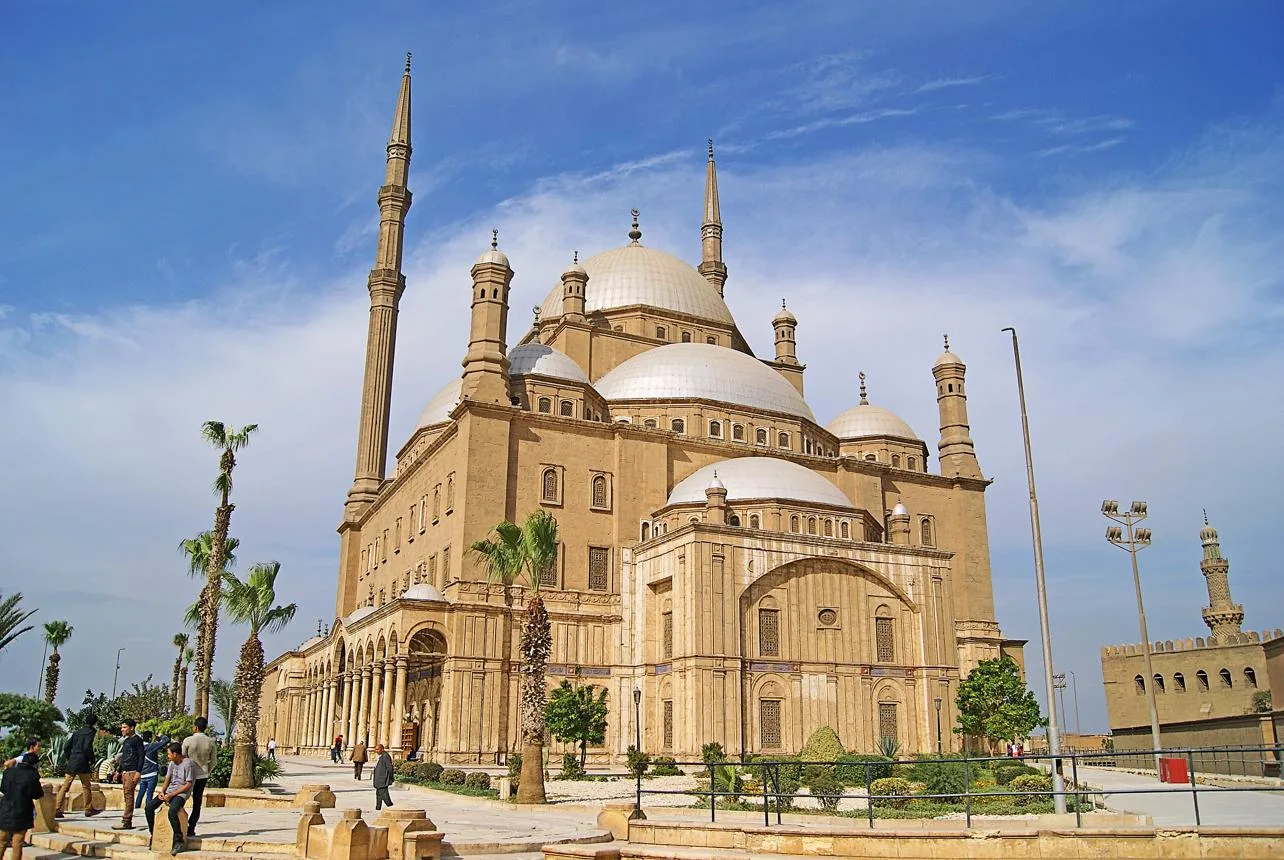
The Citadel of Saladin stands on the Mokattam Hills and offers wide views across Cairo. Construction began under Saladin in the twelfth century, and the fortress served as a centre of government for many generations.
Its most recognizable building is the Mosque of Muhammad Ali, also known as the Alabaster Mosque because of its extensive use of alabaster in the interior and exterior decoration. The large central dome, surrounding semi-domes and Ottoman-inspired design make it visually different from the older Mamluk mosques.
Allow enough time to explore the mosque and the wider Citadel complex. The site also contains other historic buildings and museums, so check which areas are open before your visit.
Sultan Hassan and Al-Rifa'i Mosques
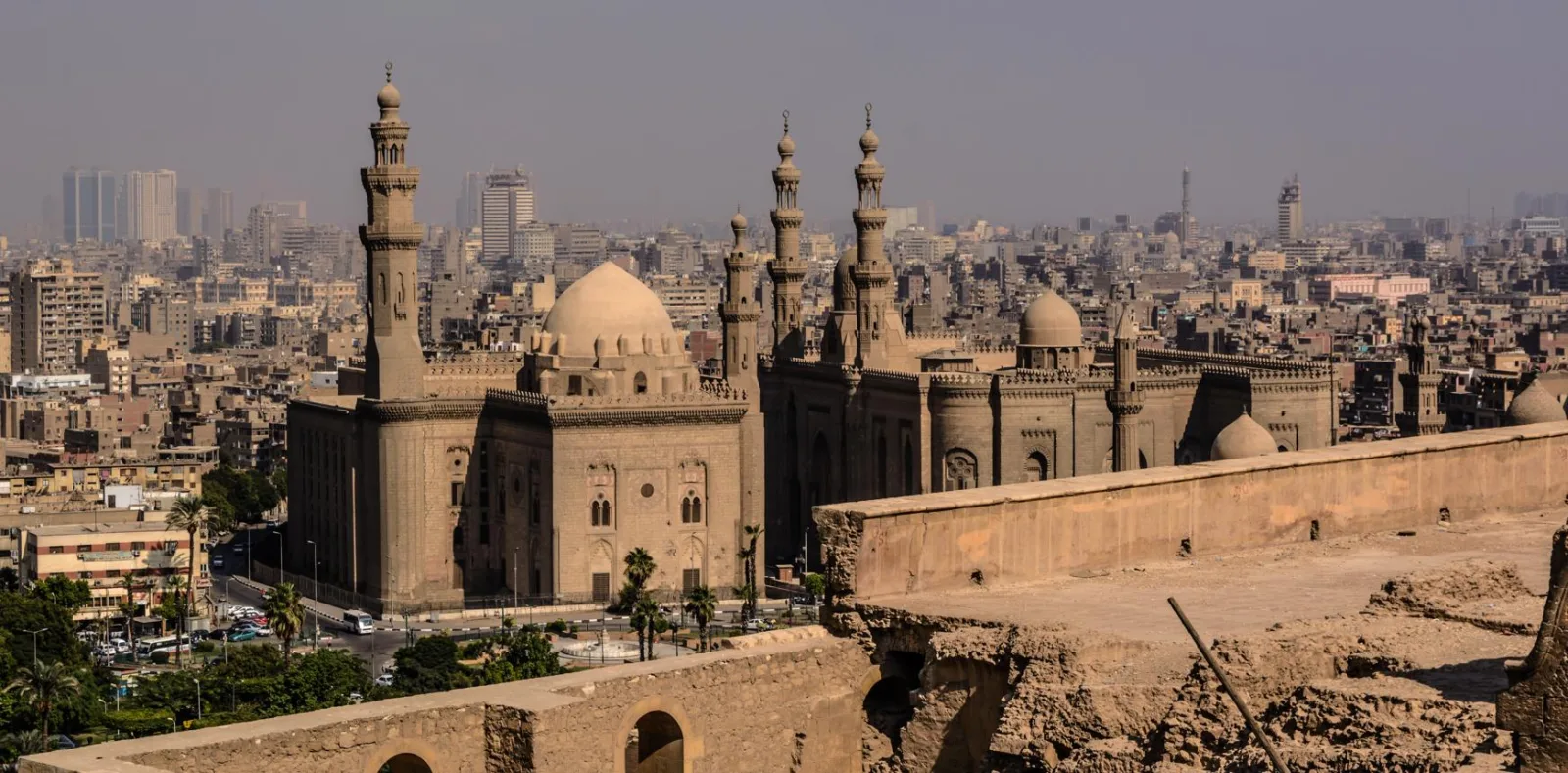
The Sultan Hassan Mosque and Madrasa is one of the finest examples of Mamluk architecture in Cairo. Built in the fourteenth century, it is known for its monumental entrance, high walls, spacious courtyard and the arrangement of its religious teaching spaces.
Directly beside it stands the Al-Rifa'i Mosque, a much later building completed in the early twentieth century. It contains royal tombs, including those of members of the Muhammad Ali dynasty. Visiting the two buildings together makes it easy to compare medieval Mamluk design with the more recent architectural interpretation of Islamic Cairo.
Mosque of Ibn Tulun
The Mosque of Ibn Tulun dates to the ninth century and is one of the oldest and largest mosques in Cairo. Its broad open courtyard, arcades and distinctive spiral minaret make it especially interesting for visitors who want to understand early Islamic architecture in Egypt.
The building is associated with Al-Qata'i, the capital founded by Ahmad Ibn Tulun. Its relatively open layout provides a different experience from the more densely decorated Mamluk monuments. Take time to walk around the courtyard and observe the repeated arches and geometric details.
Al-Azhar Mosque
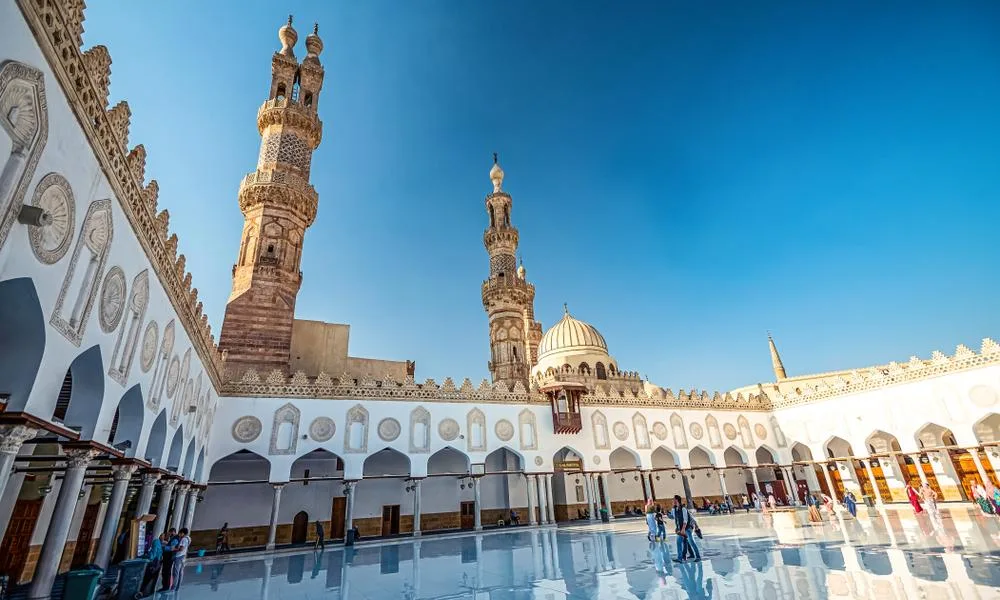
Founded in the Fatimid period around 970 AD, Al-Azhar Mosque became one of the most influential centres of Islamic learning in the world. It has developed through many centuries, with additions and architectural details reflecting different periods of Cairo's history.
Visitors should remember that Al-Azhar remains an active religious institution. Access to certain areas may be restricted during prayers or religious activities, and visitors should follow instructions from staff. Its location also makes it a convenient starting point for exploring the nearby bazaar and historic streets.
Al-Muizz Street (Open-Air Museum)
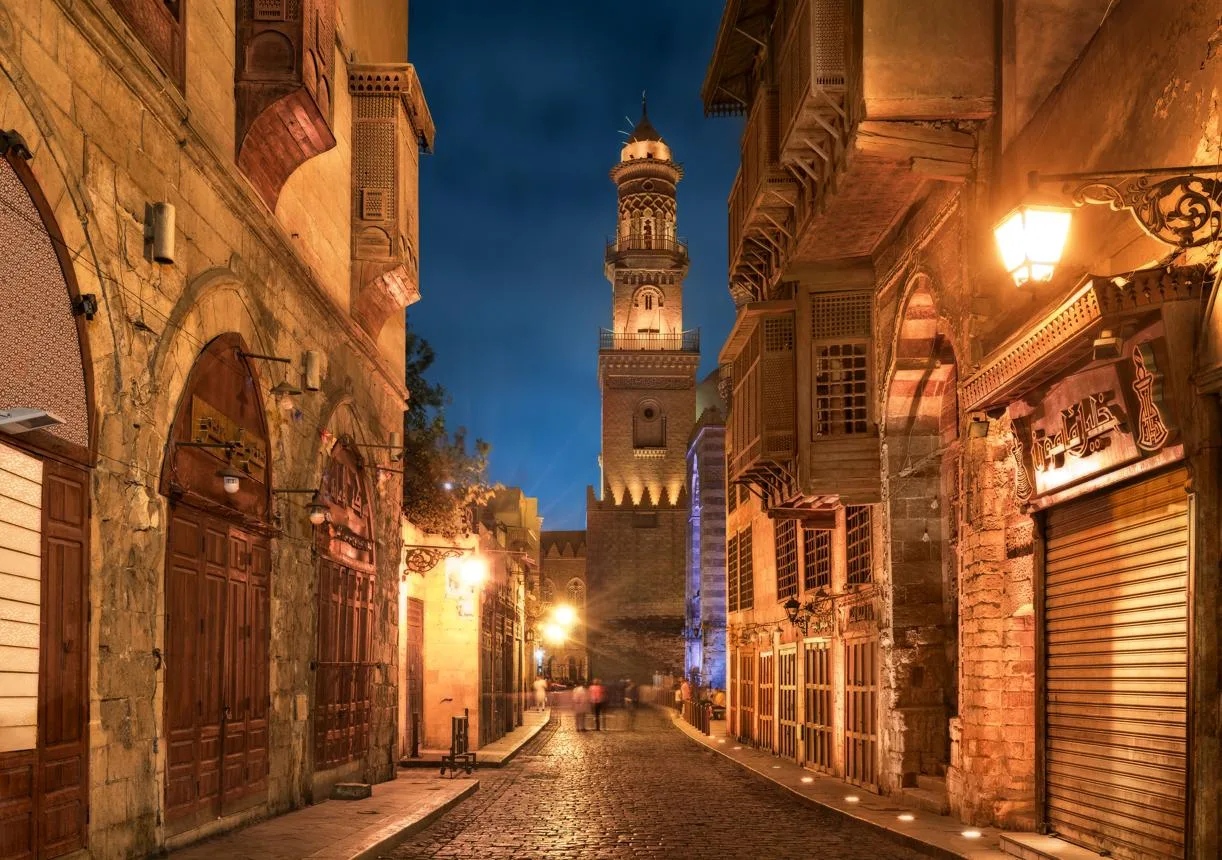
Al-Muizz Street is one of the most rewarding places to experience medieval Cairo. It runs through the historic Fatimid city and is lined with mosques, madrasas, mausoleums, old houses and traditional commercial buildings.
The street is sometimes described as an open-air museum because so many historic structures survive along its route. Look for the Qalawun Complex, Al-Aqmar Mosque and decorative entrances that reveal the craftsmanship of different periods. The surrounding lanes are also part of the experience, with workshops, small shops and traditional markets still operating.
A walk along al muizz street is particularly suitable for visitors who want to combine architecture with local atmosphere. The route is best explored at a relaxed pace, allowing time to enter buildings that are open to visitors.
Bab Zuweila and Bab al-Futuh
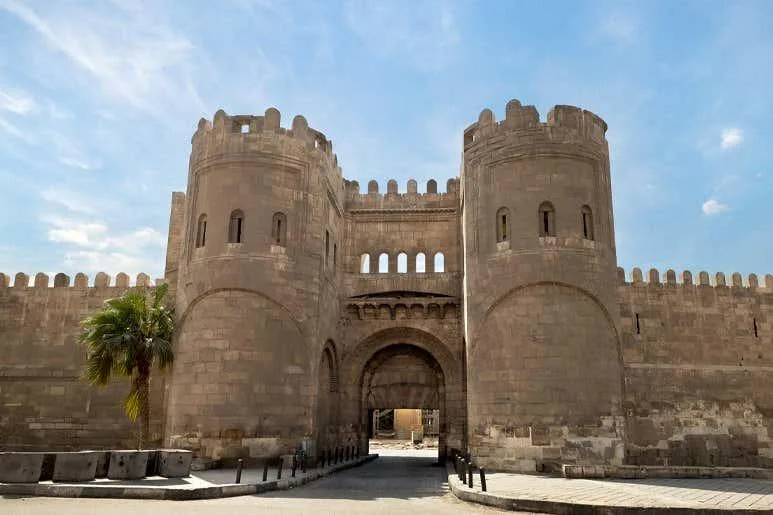
Bab Zuweila and Bab al-Futuh are two surviving gates from the Fatimid city walls. Bab al-Futuh marks the northern entrance to the historic walled city, while Bab Zuweila stands at its southern end.
Both gates are important examples of medieval defensive architecture. Their massive stone structures and towers help visitors understand the scale of the original city fortifications. They also provide useful reference points for walking along Al-Muizz Street from north to south.
Qalawun Complex and Bayt al-Suhaymi
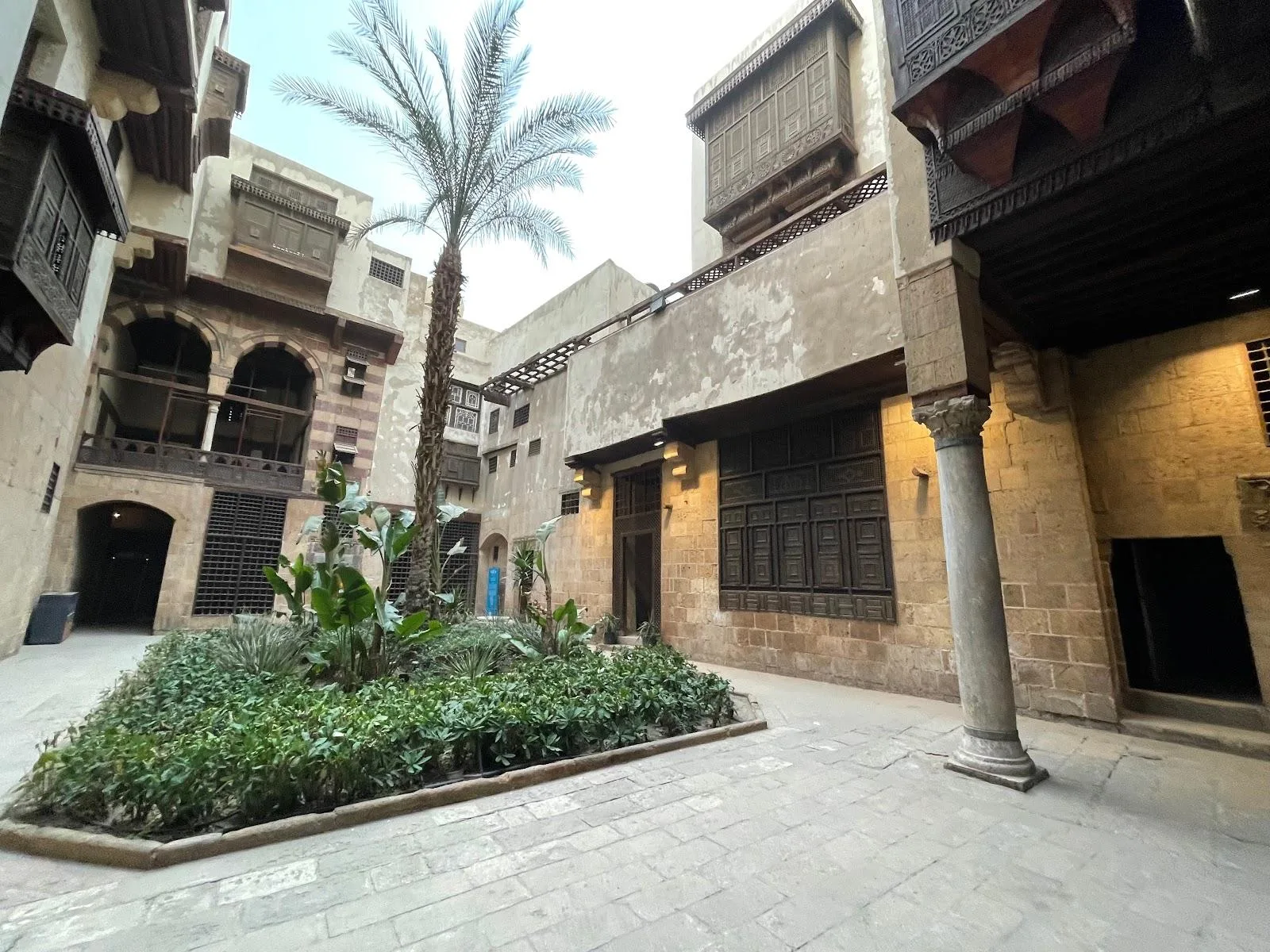
The Qalawun Complex is a major Mamluk monument on Al-Muizz Street. It originally brought together religious, educational and charitable functions, including a madrasa, mausoleum and hospital. Its decorated façade and architectural details make it one of the essential stops for anyone interested in mamluk architecture.
Bayt al-Suhaymi offers a different perspective on historic Cairo. This traditional house in the Gamaliya area preserves domestic architectural features such as wooden mashrabiyas, internal courtyards and rooms arranged around family life. It helps visitors understand how people lived in the historic city, beyond the grand religious monuments.
Khan el-Khalili Bazaar & El Fishawy Café
Khan el-Khalili is one of Cairo's best-known traditional markets. Its narrow lanes contain shops selling souvenirs, metalwork, lamps, textiles, spices, jewellery and other products. The market is busy, colourful and often crowded, especially in the afternoon and evening.
Nearby, El Fishawy Café is a historic coffeehouse where visitors can pause for tea or coffee and watch the activity around the bazaar. It is a popular stop, but you do not need to spend a long time there if your schedule is tight. For a more personal introduction to the district, consider including the market in an islamic cairo tour with a guide who can explain the area's history and help you navigate its busiest lanes.
Al-Azhar Park
Al-Azhar Park provides a green space and open views over the historic city. It is a useful place to take a break after visiting the crowded streets and monuments, particularly later in the day when the weather is comfortable.
The park is not a medieval monument, but its elevated viewpoints make it a good place to appreciate the scale of historic Cairo. It can be added to a full-day itinerary, although reaching it from the main Al-Muizz Street walking route may require a short drive or additional walking time.
Islamic Architecture Details to Look For
Historic Cairo is especially interesting because its buildings do not all belong to one architectural style. Look closely at the details and you will notice how construction techniques, decoration and building functions changed over the centuries:
Taking time to observe these features makes the visit more rewarding than simply moving from one famous monument to another.
Suggested Walking Routes (Half Day & Full Day)
Islamic Cairo is spread across several neighbourhoods, so the best route depends on how much time you have and which monuments interest you most. The following routes reduce unnecessary backtracking and group nearby sites together. Some journeys between the three areas require a car rather than a continuous walk.
Route 1: The Citadel and southern monuments
This route is best for visitors interested in major mosques and the history of Cairo's rulers. Allow around half a day, depending on how many interiors you visit.
The Citadel and the two mosques at Salah al-Din Square can be grouped together. Ibn Tulun Mosque is farther away, so arrange transport rather than assuming the entire route is a short walk.
Route 2: Al-Muizz Street from Bab al-Futuh to Bab Zuweila
This route follows the historic north-south spine of Fatimid Cairo. It is ideal for visitors who enjoy medieval streets, architectural details and traditional markets.
Allow several hours if you plan to enter monuments and take photographs. Opening arrangements can vary, so check access before setting out.
Route 3: Al-Azhar, Khan el-Khalili and El Fishawy Café
This is a shorter route that works well for visitors with limited time or those who want to focus on the atmosphere of the historic centre.
How to plan a half-day visit: Choose one route rather than trying to cover all the major districts. The Citadel route is best for monumental architecture, while Al-Muizz Street is ideal for medieval urban history. The Al-Azhar and Khan el-Khalili route offers a shorter introduction to the historic centre.
How to plan a full-day visit: Start early at the Citadel and the mosques around Salah al-Din Square. Continue to Ibn Tulun Mosque, then travel to Al-Azhar and explore the nearby historic streets and Khan el-Khalili. If you still have time and energy, finish with Al-Azhar Park. Avoid scheduling every monument too tightly because prayer times, visitor access and traffic can affect your day.
Opening Hours & Ticket Prices
Opening hours and admission charges differ between monuments. Some are active mosques, some are managed archaeological sites, and others are part of larger complexes. Friday prayer times, religious occasions, restoration work and official changes can affect visitor access.
The following table is a planning guide. It distinguishes between sites that normally require admission and public areas where visitors can walk without buying a general district ticket. Confirm the current arrangements directly before visiting, especially if you are planning to enter several monuments.
Ticket prices are subject to change, and eligibility for student or other reduced rates depends on the applicable rules and accepted identification. For a reliable budget, confirm the current foreign-visitor admission charges at the official ticket office or the relevant official monument listing on the day of your visit.
If you prefer to cover the main monuments with transport and a guide arranged in advance, Ramasside Tours offers an Old Islamic Cairo Tour covering the Citadel, Muhammad Ali Mosque, Sultan Hassan, Al-Rifa'i, Ibn Tulun and Al-Azhar. Check the tour page for its current price and inclusions.
How to Get to Islamic Cairo
Islamic Cairo does not have one central entrance or a metro station directly inside the entire historic district. The best drop-off point depends on which route you plan to follow.
For the Al-Azhar Mosque and Khan el-Khalili area, a taxi or ride-hailing service such as Uber or Careem can take you towards Al-Hussein Square or Al-Azhar. This is a practical starting point for exploring the market and nearby historic streets.
For the Citadel, ask your driver to take you to the Citadel entrance rather than Al-Hussein Square. If you plan to visit Sultan Hassan and Al-Rifa'i, you can continue from the Citadel area by car or on foot, depending on your energy and the weather.
For Al-Muizz Street, choose a drop-off point near Bab al-Futuh or Bab Zuweila according to the direction of your walk. Traffic can be heavy, especially during busy periods, so allow extra time for transfers between districts.
Visitors arriving from central hotels can arrange a private transfer or choose from the available Cairo tours to combine historic attractions with other parts of the city. If you want to understand everyday neighbourhood life beyond the main monuments, The Real Cairo as a true local tour offers another way to explore the capital.
Dress Code & Mosque Etiquette
Islamic Cairo includes active places of worship, so respectful clothing and behaviour are important. Visitors should dress modestly when entering mosques, even if they are visiting primarily for sightseeing.
Photography rules differ between monuments. Some areas may allow personal photography while others restrict cameras, tripods or photography inside specific rooms. Always check the rules at the entrance rather than assuming that permission at one site applies to another.
Best Time to Visit (Including Ramadan)
The most comfortable months for walking around Islamic Cairo are generally the cooler months, from autumn through spring. Daytime temperatures are usually more suitable for exploring outdoor streets and large monument complexes than during the hottest part of summer.
Start early whenever possible. Morning visits are especially useful for the Citadel and the main mosques, while Al-Muizz Street and Khan el-Khalili can be enjoyable later in the afternoon and evening. Weekends and public holidays may bring larger crowds.
Visiting during Ramadan: Ramadan offers a different atmosphere in the historic district. Streets and markets can become particularly lively before sunset and after iftar, with decorations, lanterns and evening social activity. Khan el-Khalili is often an appealing place to experience this atmosphere.
However, daytime routines may change. Some attractions may adjust opening hours, restaurants may have different service arrangements, and transport can become busy around iftar. Prayer times can also affect access to mosques.
Ramadan can be an excellent time to experience local culture, but it is important to build flexibility into your schedule.
Is Islamic Cairo Safe for Tourists?
Islamic Cairo is a popular visitor area, but it is also a busy urban neighbourhood with crowded markets, narrow streets and active traffic. Most visits are straightforward when travellers use normal city precautions and remain aware of their surroundings.
Keep valuables secure, carry only the cash you need for the day and use a reliable transport service when travelling between distant attractions. In crowded market lanes, keep your phone and wallet somewhere secure rather than in an open pocket.
You may encounter vendors offering souvenirs, guided services or photographs. A polite and clear response is usually enough if you are not interested. If you want to buy something, ask the price before agreeing and compare a few shops rather than feeling pressured to purchase immediately.
Be especially careful when crossing roads. Traffic conditions can be unpredictable, and some historic streets are narrow or busy with pedestrians, delivery vehicles and motorcycles. Follow local instructions around religious sites and avoid entering closed or poorly lit areas.
Visiting Islamic Cairo With a Guide vs On Your Own
You can explore parts of Islamic Cairo independently, especially Al-Muizz Street, Khan el-Khalili and the public areas around the historic gates. However, the district's history is layered, and some of its most interesting details are easy to miss without explanation.
A guided visit is particularly valuable if you want to understand the difference between a mosque, madrasa, sabil and mausoleum, or if you want to connect the monuments to the people and dynasties that built them.
Ramasside's Old Islamic Cairo Tour is listed as a 5-6-hour experience and includes the Citadel, Muhammad Ali Mosque, Sultan Hassan and Al-Rifa'i mosques, Ibn Tulun Mosque and Al-Azhar. You can also explore broader Cairo night tours if you want to experience the city after the main sightseeing hours.
Combining Islamic Cairo With Coptic Cairo
It is possible to visit Islamic Cairo and Coptic Cairo in one day, but you should plan the order carefully and avoid trying to enter every monument. The two areas offer different historical experiences and are not immediately next to each other.
Start the day in Coptic Cairo, where you can explore the Hanging Church, the Church of St. Sergius and Bacchus, and other landmarks around the historic religious complex. Then travel by car to the Citadel or the Al-Azhar and Khan el-Khalili area, depending on which Islamic Cairo attractions matter most to you.
This is a full day, and traffic can affect how much you manage to see. If you have more time, consider separating the two districts or adding other day trips from Cairo to your stay. Travellers with a strong interest in ancient and Islamic history can also browse archaeology lovers tour packages when planning a longer Egypt itinerary.
Explore the Citadel, Sultan Hassan Mosque, Al-Muizz Street and Khan el-Khalili with a licensed Egyptologist — book your private Islamic Cairo tour with hotel pickup, or contact us on
Book Islamic Cairo Tour