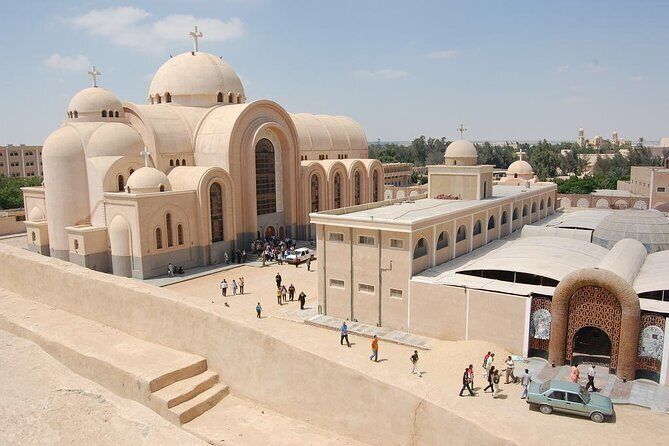
Discover a different side of Egypt with a Wadi El Natrun Monasteries Tour, a journey into the heart of the country's ancient Christian heritage. Located in the Western Desert between Cairo and Alexandria, Wadi El Natrun is home to some of the oldest Christian monastic communities in the world. This historic destination offers visitors a unique opportunity to explore centuries-old monasteries, admire beautiful religious architecture, and learn about the traditions of Coptic Christianity.
Whether you are interested in religious history, cultural experiences, or exploring Egypt beyond its famous pyramids and temples, a visit to Wadi El Natrun promises a memorable experience. Join us as we explore the area's most significant monasteries, discover their fascinating stories, and share everything you need to know to plan your visit.
What Is Wadi El Natrun Famous For?
Wadi El Natrun is one of Egypt’s most important centers of Coptic Christian heritage and early monastic life. Located in the Western Desert between Cairo and Alexandria, this historic valley is known for its ancient monasteries, religious traditions, and peaceful desert surroundings. A Wadi El Natrun monasteries tour offers visitors an opportunity to explore a remarkable part of Egypt’s spiritual and cultural history beyond its famous pharaonic sites.
The valley became a major destination for Christian monks seeking solitude, prayer, and a life of devotion. Today, its surviving monasteries preserve centuries of religious traditions, historic architecture, manuscripts, and sacred artwork. For travelers interested in religious history, architecture, and cultural experiences, Wadi El Natrun provides a meaningful perspective on another important chapter of Egyptian civilization.
The Four Monasteries of Wadi El Natrun
The four historic monasteries of Wadi El Natrun are among the most significant surviving centers of Coptic monasticism. Each has its own history, religious character, and architectural features, making a visit especially rewarding for travelers interested in Christian heritage.
Exploring the Coptic monasteries of Wadi El Natrun allows visitors to understand how monastic communities developed and maintained their traditions across generations. Although the monasteries share a common spiritual heritage, their individual churches, courtyards, defensive structures, and religious collections offer different experiences.
Deir al-Baramus (Monastery of the Romans)
Deir al-Baramus, commonly known as the Monastery of the Romans, is traditionally regarded as the oldest of the four monasteries. Its origins are associated with the early development of Christian monasticism in the Egyptian desert, and its name is linked to the Roman brothers Maximus and Domitius in Coptic tradition.
Visitors may explore historic church spaces, traditional monastic architecture, and the peaceful surroundings of this long-established religious community. The monastery is an important stop for understanding the early spiritual history of the region and the growth of Christian monastic life in Egypt.
The Deir al-Baramus monastery remains a significant destination for religious pilgrims and cultural travelers. Access to particular buildings or religious areas may be restricted, so visitors should follow monastery regulations and any instructions provided by their guide.
Monastery of Saint Bishoy
The Monastery of Saint Bishoy is one of the best-known religious landmarks in Wadi El Natrun. Dedicated to Saint Bishoy, an influential figure in Coptic Orthodox tradition, the monastery is associated with centuries of prayer, spiritual teaching, and monastic devotion.
Its grounds include historic churches and spaces connected with the monastery’s continuing religious life. Visitors can learn about Saint Bishoy, the traditions preserved by the resident monks, and the monastery’s role in the development of Coptic Christianity.
The Monastery of Saint Bishoy is particularly meaningful for travelers seeking to understand the living heritage of Coptic Orthodox communities. Respectful behavior is essential, as this is an active religious institution rather than simply a historical attraction.
Monastery of Saint Macarius (Abu Makar)
The Monastery of Saint Macarius, also known as Abu Makar, is closely connected with the origins of organized monastic life in the Egyptian desert. Saint Macarius the Great became one of the most influential early Christian ascetics, and the monastery established in his name developed into an important spiritual center.
The monastery is known for its religious history, churches, and continuing monastic community. Its long-standing traditions illustrate how Wadi El Natrun became a major center of Christian spirituality, attracting monks and religious scholars over many centuries.
A visit to the Monastery of Saint Macarius provides valuable context for understanding Coptic monasticism in Egypt. Since it remains an active religious community, visitors should confirm access arrangements in advance and recognize that some areas may not be open to tourists.
The Syrian Monastery (Deir El-Suryan)
The Syrian Monastery, or Deir El-Suryan, is another major landmark among the historic monasteries of Wadi El Natrun. Its name reflects its historical association with Syrian monks, who contributed to the monastery’s religious and cultural development.
The monastery is especially valued for its historic church interiors, religious art, and architectural heritage. Its surviving features offer insight into the cultural connections that linked Christian communities across Egypt and the wider Eastern Mediterranean.
For travelers researching the Syrian Monastery Egypt, this site provides an opportunity to explore a distinctive part of Coptic heritage. Its history demonstrates that Wadi El Natrun was not an isolated religious center but part of a broader network of Christian traditions and cultural exchange.
History of Coptic Monasticism in Wadi El Natrun
Wadi El Natrun played a central role in the emergence and development of Christian monasticism. During the early centuries of Christianity, the Egyptian desert attracted individuals seeking a life of prayer, solitude, discipline, and spiritual reflection. Over time, these isolated practices developed into organized monastic communities that influenced Christian traditions far beyond Egypt.
The Wadi El Natrun history is closely associated with influential figures such as Saint Macarius the Great and other early desert fathers. Their spiritual teachings helped establish the valley as a major destination for monks, pilgrims, and religious scholars. The monasteries that developed here became centers of worship, learning, and the preservation of religious traditions.
Throughout the centuries, monastic communities faced changing political conditions, periods of hardship, and the challenges of maintaining religious institutions in a desert environment. Despite these difficulties, several monasteries survived and continued their spiritual work. Their churches, manuscripts, and traditional practices reflect the resilience of Coptic Christian heritage.
Today, Christian monasteries in Egypt remain important to the country's cultural and religious identity. Wadi El Natrun is particularly significant because it combines ancient monastic history with living religious communities, allowing visitors to appreciate both the historical foundations and continuing traditions of Coptic Christianity.
Wadi El Natrun Monasteries Tour from Cairo
A Wadi El Natrun tour from Cairo is an excellent option for travelers who want to discover Egypt’s Christian heritage without planning an overnight stay. The journey takes visitors from the busy capital into a quieter desert landscape where historic monasteries preserve centuries of religious tradition.
A guided excursion can make the experience more informative by explaining the background of each monastery, the importance of early Christian monasticism, and the differences between the four sites. Private transportation can also simplify the journey, particularly for visitors who prefer a flexible schedule and a more personalized cultural experience.
The Wadi El Natrun Egypt region is generally visited as a day excursion from Cairo, although actual journey times depend on traffic, road conditions, the chosen route, and the time spent at each monastery. Travelers should confirm which monasteries can be visited on their selected date, as religious schedules and access rules may affect the itinerary.
For those who prefer a more personal experience, a Wadi El Natrun private tour can offer greater flexibility in pacing and opportunities to discuss the region’s history with a knowledgeable guide. It is particularly suitable for history enthusiasts, religious travelers, photographers, and visitors interested in experiences beyond Egypt’s most familiar archaeological attractions.
Wadi El Natrun Monasteries Tour Itinerary
A typical Wadi El Natrun day trip begins with a transfer from Cairo, followed by visits to the monasteries that are accessible on the day. The schedule can be adjusted according to travel conditions, monastery opening arrangements, and the interests of the visitors.
Hotel Pickup and Transfer to Wadi El Natrun
The excursion typically begins with pickup from an agreed location in Cairo, such as a hotel, followed by a drive toward Wadi El Natrun. The journey provides a transition from the urban environment of the capital to the quieter landscape of the Western Desert.
During the transfer, travelers can discuss the day's plan with their guide and learn about the historical significance of the region. Confirming pickup details, transportation arrangements, and the planned visiting order in advance helps ensure a smoother experience.
Visiting the Four Coptic Monasteries
The main part of the excursion focuses on exploring the historic monasteries, subject to access permissions and the schedule confirmed for the visit. Each site introduces a different aspect of Coptic Christian history, from early monastic traditions to the artistic and architectural heritage preserved by resident communities.
A well-planned itinerary may include:
- Deir al-Baramus: Discover the traditions and history associated with one of the valley's oldest monasteries.
- Monastery of Saint Bishoy: Learn about Saint Bishoy and the monastery's continuing spiritual importance.
- Monastery of Saint Macarius: Explore the historical legacy of an influential figure in Egyptian monasticism.
- The Syrian Monastery: Appreciate its distinctive heritage and connections with Syrian Christian communities.
Visiting all four sites may not always be possible, since access arrangements, religious activities, and time constraints can affect the day's schedule. Travelers should confirm the intended stops before departure and remain flexible if a monastery is temporarily inaccessible.
Return Transfer to Cairo
After the monastery visits, travelers return to Cairo by road. The arrival time depends on traffic, the duration of the visits, and any changes to the itinerary during the day.
A private transfer can be helpful for travelers who prefer a direct return to their accommodation or need to coordinate the excursion with other sightseeing plans. When arranging the tour, it is advisable to allow sufficient flexibility rather than scheduling another activity too tightly after the expected return.
How Long Does a Wadi El Natrun Day Trip Take?
A Wadi El Natrun day trip from Cairo generally requires a full day, with the total duration depending on transportation, traffic, and the number of monasteries visited. Travelers should allow time for the drive in both directions as well as the visits themselves.
The overall schedule can vary according to the following factors:
- Transportation: Road conditions and traffic around Cairo can affect the journey.
- Number of monasteries: Visiting several sites takes longer than exploring one or two.
- Access arrangements: Religious services, monastery schedules, and visitor restrictions may influence the itinerary.
- Personal interests: Travelers who want more time to learn about church architecture, religious history, and local traditions may prefer a less hurried schedule.
For a comfortable experience, arrange the pickup and return times in advance and confirm whether the planned itinerary includes all four monasteries. A flexible schedule is especially useful when the main purpose of the trip is to explore the region's religious heritage rather than simply visit each location briefly.
What Is Included in the Wadi El Natrun Monasteries Tour?
Tour inclusions depend on the selected package and operator, so travelers should review the booking details before confirming their excursion. A private or guided day tour may offer a convenient way to coordinate transportation and visits without having to arrange every part of the journey independently.
Depending on the package selected, possible inclusions may be:
- Transportation: Private or arranged road transfers between Cairo and Wadi El Natrun.
- Hotel pickup and drop-off: Available when specified in the tour details and agreed upon during booking.
- Tour guide: A guide who can explain the region's history, monastic traditions, and cultural significance, subject to the selected package.
- Planned monastery visits: An itinerary identifying the sites intended for the excursion, subject to access permissions.
- Schedule coordination: Assistance organizing the order of visits and allowing time for travel between locations.
Entrance fees, meals, drinks, gratuities, and any special access arrangements should be checked individually rather than assumed to be included. Before booking, confirm the transportation type, guide arrangements, planned monasteries, total duration, and cancellation terms so the experience matches your expectations.
Travel Tips for Visiting Wadi El Natrun Monasteries
A little preparation can help make a visit to Wadi El Natrun more comfortable and respectful. Since the monasteries are active religious institutions, visitors should treat the sites as places of worship as well as historic landmarks.
- Dress modestly: Choose clothing that covers the shoulders and knees, and follow any additional dress requirements communicated by the monasteries.
- Respect religious activities: Keep noise to a minimum and avoid interrupting prayers, services, or the daily routines of monks.
- Ask before taking photographs: Photography rules may vary between monasteries and individual areas. Always follow posted restrictions and instructions from staff.
- Confirm access in advance: Not every building or religious area is necessarily open to visitors, and schedules may change.
- Carry drinking water: The region has a desert environment, so water is useful, particularly during warmer weather.
- Wear comfortable shoes: Walking around monastery grounds and historic buildings may involve uneven surfaces.
- Plan transportation carefully: Confirm pickup arrangements, the expected return time, and whether all four monasteries are included.
- Bring identification when appropriate: Keep your travel documents available and follow any visitor registration requirements that apply.
Travelers interested in Christian history may also benefit from reading about the monasteries before departure. Understanding the significance of the desert fathers and the development of monastic communities can make the architecture, churches, and traditions encountered during the excursion more meaningful.
Tour Itinerary & Details
Your Ramasside tour guide will be waiting for you holding a sign bearing the Ramasside logo, ensuring an effortless greeting—no need to look around, as your guide will meet and welcome you directly.
From the moment your journey begins, your guide will give you their undivided attention. Once in the vehicle, they will share detailed historical context about the monasteries and provide insights into the religious significance of the area.
Travel in a modern, air-conditioned vehicle to this serene desert valley to explore the four surviving monastic sanctuaries where monastic traditions have continued unbroken for centuries.
- Deir Al-Baramus: Begin by visiting the oldest surviving monastery in Wadi El Natrun, known for its historic churches and ancient keeps.
- Monastery of Saint Pishoy (Anba Bishoy): Continue to this major spiritual center, where the preserved body of Saint Pishoy rests.
- Monastery of Saint Macarius (Deir Abu Makar): Explore this historically rich and influential monastic site.
- The Syrian Monastery (Deir Al-Suryan): Conclude with the smallest and most compact of the four monasteries, renowned for its ancient frescoes and unique cultural heritage.
On the return drive to Alexandria, additional photo stops can be arranged if time permits. Conclude your day with a comfortable drop-off back at your hotel in Alexandria.
Included:
- Transfers in a modern, air-conditioned vehicle.
- Professional English-speaking tour guide.
- Entrance tickets to all mentioned monastic sites.
- All service charges and taxes.
Excluded:
- Any optional extras or personal expenses not mentioned in the itinerary.
Tour Add-ons & Upgrades
- Upgrade to a Luxury Vehicle for Maximum Comfort:
- Upgrade to an executive luxury vehicle for a premium travel experience. Our spacious luxury fleet offers extended legroom, advanced climate control, and complimentary refreshments. Generous luggage space ensures everything remains organized and accessible, keeping you refreshed throughout the journey.
- Professional Photographer:
- Book a professional photographer to accompany your journey. Our studio photographers capture your best moments and top angles against iconic historic backdrops for an additional $50 per day.
Important Tour Notes & Policies
- Payment Policy:
- We accept all secure payment methods: Visa, MasterCard, PayPal, and Direct Bank Wire Transfer.
- Airport Arrival Transfers (Highly Recommended):
- Avoid airport taxi negotiations by booking a private arrival transfer straight to your hotel for $40per way.
- Visa Upon Arrival Assistance ($45 per person):
- Bypass immigration queues and streamline your arrival. Our representative pre-arranges your visa before landing—simply provide a clear passport copy in advance.
- Travel Insurance – Powered by AIG:
- Secure your trip with comprehensive coverage through AIG Travel Guard: $15 per day or $25 per week per person.
- Pick-up Surcharges:
- Pick-ups from outer suburban districts such as Heliopolis (airport area), 6th of October City, or equivalent zones are subject to an additional transfer surcharge.
- Nationwide Egypt Operations:
- We operate branches across Egypt and run scheduled excursions in Cairo, Luxor, Aswan, and Alexandria. Click here to explore our complete collection of tours.
- Domestic Flight Business Class Upgrade:
- Special Offer: For an additional $60 per person, upgrade to Business Class on domestic flights to enjoy enhanced comfort, expanded seating, extra legroom, and premium onboard service.
- Pricing & Currency:
- Prices are quoted in USD, with payments accepted in EUR or GBP. Rates are per person and continuously updated to guarantee competitive rates. Tours operate primarily as small, semi-private groups; private VIP arrangements can be organized upon request.
- Wheelchair Accessibility:
- Wheelchair-accessible vehicles and itineraries are available upon request; please specify requirements when booking.
- Vegetarian & Dietary Requests:
- Vegetarian and specific dietary preferences are accommodated; please advise us at the time of booking.
- Special Site Entry Tickets:
- General site entry is covered. Specialty interior admissions—such as going inside the Great Pyramids, the Royal Mummies Hall at NMEC in Cairo, or King Tutankhamun’s tomb in Luxor’s Valley of the Kings—require supplementary tickets payable on-site.
- Alexandria Note:
- The Bibliotheca Alexandrina is closed on Fridays and public holidays. Entrance to the main reading hall requires an additional ticket on-site.
- Children Policy:
- 0 – 1.99 years: Free of charge
- 2 – 11.99 years: 50% of adult tour price
- 12+ years: Full adult rate
- (Note: Domestic flight components may carry separate airline child fares).
- Booking Confirmation:
- Instant confirmation is delivered for online bookings. Inquiries confirmed directly with our team will receive an official confirmation voucher detailing the itinerary, operator contacts, and 24/7 customer support.
- Social Channels:
- View traveler photos, guides, vehicles, and daily tour highlights on our active Facebook page: Click Here.
For more information, contact us at: [email protected]